Stickers and Tanks
A short article (in Hungarian) on estimating population size based on the maximum of a sample.
Originally submitted: 2026.09.17.
A short article (in Hungarian) on estimating population size based on the maximum of a sample.
Multiple ConHex boards on one A4 paper. The PostScript program has several parameters, one of which is the board size (number of rectangles along an edge), for which the default is 3 (see the PDF version).
Printable 4-page board for TZAAR, just large enough to use with poker chips. Written in PostScript with adjustable parameters.
Download the PostScript program, or the PDF version (print 2 copies for one board).
With a subset of the same poker chips (8 chips in three colors) you can also play Qawale - its (dual) board fits nicely on an A4 paper.
A Hungarian summary of Phil & Matt Eklund's game Pax Renaissance, rearranging the rules in a (hopefully) more practical order. About 7 printed pages. (Also in MarkDown.)
A Hungarian summary of Matt Eklund's game Pax Transhumanity, rearranging the rules in a (hopefully) more practical order. About 5 printed pages. (Also in MarkDown.)
A paper submitted to the SPM'26 conference, although eventually it got fast-tracked to be published at the CAD journal. This is a continuation of the work by Jázmin Szörfi, where we use GBS patches to create models from cages with possibly concave or multiply connected faces.
See also my implementation. and my slides at the SPM conference.
A short paper on the invariants of major aesthetic curve families, introducing the notion of "constant forms", as well as a common constant form for log- and trig-aesthetic curves. Presented at a local conference, see also my slides.
Printable boards for TwixT (pencil-and-paper version). Written in PostScript with adjustable parameters, so you can have different board sizes.
Download the PostScript program, or the PDF versions (24x24, 30x30, 48x48, and 2 standard 24x24 boards on one A4 page).
All the words I learned from the Japanese New Express Plus Uzbek textbook (with meanings in Hungarian). Also some grammar notes (in Hungarian). About using the dictionary file, see the snippet page.
A logical summary of the verbal system (in Hungarian) is also available.
A Hungarian summary of Phil Eklund's game Neanderthal, rearranging the rules in a (hopefully) more practical order. About 8 printed pages. (Also in MarkDown.)
A fun paper I wrote during Christmas on how to create a special 9-sided die that behaves approximately as a d4F roll (i.e., four Fudge dice). There is also a DIY cutout model in PostScript and PDF formats, and my slides at our local conference, along with a simple video.
This was an interesting project, because almost everything (except the cutout model and the rolling experiments) was done by LLMs.
A simple printable set of Reiner Knizia's Chartae. It also includes the rules.
Some memos I've taken while reading the Fennel reference manual.
Short (Hungarian) descriptions of two interesting table-top role-playing systems: Freeform Universal and Fate. The latter is based mainly on Fate Accelerated Edition, but the main differences from Fate Condensed (and Fate Core) are also covered.
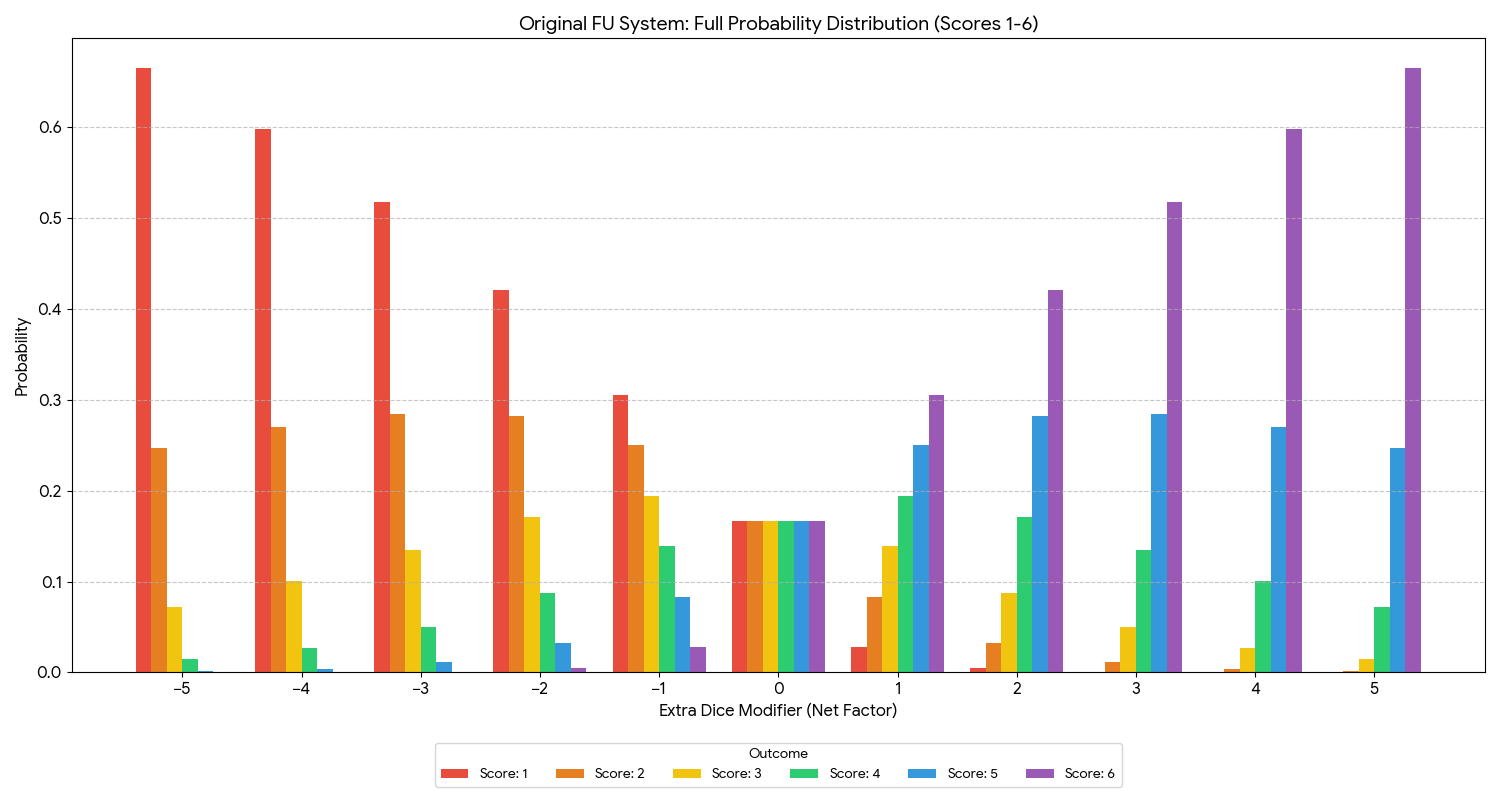
There is also a graph of the probabilities in FU, depending on the number of extra dice. As for the probabilities in Fate, I have written a paper about that.
Some memos I've taken while reading the Janet reference manual.
A triangular grid on A4 paper for playing (dual versions of) many abstract games, including Hex, Trike and Catchup.
The PostScript program (also in PDF) was this time written not by me, but by Claude Sonnet (with a little help).
A paper published in the G journal, summarizing the main results of the PhD thesis of Eduard Lehr on a curve family whose curvature is a periodic function of arc length, a relatively obscure work from the 1930s. Aside from several corrections, this paper also features a short biography of Lehr, as well as an applet for getting acquainted with this interesting curve family.
See also my other paper on this curve family.
Hex is probably the simplest game (in terms of rules) that has depth and complexity. It is played on a hexagonal board, but I prefer the dual triangular one where you place your stones on the intersections. The board is a parallelogram with n vertices on the sides, where n is usually 11, but other sizes are also played.
Since this is a good game to play with a pencil on paper, I created an A4 PostScript board (also in PDF). In the PostScript version you can set up the size of the board and the size of the edges, and it automatically generates the most board that can fit on the page.
My keynote presentation at the Slovak-Czech Conference on Geometry and Graphics. It is based on my previous presentations: (i) (log-)aesthetic curves (ii) extensions of log-aesthetic curves (iii) log-aesthetic curves and generalized Archimedean spirals.
A paper written for the SMI'25 conference, as a follow-up on our previous paper on the subject, now extended to GBS and more general patch types, enabling the use of B-spline boundaries and multiply connected patches. There is also a new, logical system of blending functions associated with the template geometry, and both approximative and exact ribbon interpolation.
Published in Computers and Graphics (open access).
A cheat sheet for the Toki Pona language on just one sheet of paper (in Hungarian). Loosely based on a similar cheat sheet in English; contains also the "sitelen pona" ideograms.
By the way, I have (independently) arrived at quite the same principles. Around the end of 2019 I have drafted the first version of this document (in Hungarian), which was later amended by the addition of a writing system based on hangeul.
Step-by-step instructions for making a module for origami sculptures (nowadays known as Creagami). The design is not mine, naturally.
A paper published in the CAGD journal, investigating the connection between log-aesthetic curves and Archimedean spirals. It also shows how the latter can be used as an approximation of the former. An extension of the log-aesthetic family is proposed, as well.
See also the slides of my presentation at the CGTA'25 conference, and an extended version at the GMP'26 conference.
A paper proposing some variations on log-aesthetic curves: an generalization that includes catenary curves, and a similarly defined curve where the curvature is a trigonometric function of the arc length (also used for modeling curve meandering).
It is published in the Computers-Aided Design and Applications journal; there is also a short version for the proceedings of the CAD'25 conference, and the slides of my presentation.
A short article (in Hungarian) on the perceived rareness of bridge hands, with short detours into Kolmogorov complexity and Shannon's information content. There is also an English translation.
Mean and Gaussian curvatures are conventionally visualized by mapping a continuous range of colors (typically a blue-to-green-to-red scale) onto the surface. In this paper I show that this could be done better, in a way that shows problems in G2 and G3 continuity more explicitly. The figures in the paper were created by my Quad Viewer.
If you add up the cubes of all numbers from 1 to 9, you get 2025. I use this example to showcase different programming paradigms in C++ in a memo (in Hungarian; MarkDown source) for second semester students who learned C in the first semester.
My first keynote presentation, at the CAD'24 conference in Eger (Hungary). It is mostly based on our recent survey on multi-sided surface representations, and there are also a few slides on the interior control structure to be presented at SMI'24 in Detroit.
A paper written for the SMI'24 conference, on how to create a unified control structure for complex multi-sided surfaces based on (a variation of) the medial axis of its curved domain. Published in Computers and Graphics (open access).
I also presented the ideas in this paper and the one from last year's SMI conference at the Dagstuhl geometric modeling conference.
A writeup on a fun side project: modeling an acorn-shaped container for phase change materials. I have also created a real test object with a filament-based 3D printer.
2024.11.18.: The first mass-produced model!
Our survey on genuine multi-sided patches is published, at last, in the Paul de Casteljau special issue of Computer Aided Geometric Design (open access).
We have also written two other papers for a local conference: one on the exact refinement of GB(S) patches, and another one on using quadratic GB patches to create a smooth interpolation of arbitrary topology (quad)meshes. (For the latter see also the associated code and my slides.)
Step-by-step instructions on making a paper snowflake from a rectangular piece of paper. Nothing new, I guess, but saves me the time looking it up on the net every year.
A paper that was originally an idea written down in a four-line note. After presenting it at Curves & Surfaces, I have added a bit more stuff and finally it appears in (virtual) print.
It is published in the Computers-Aided Design and Applications journal; there is also a short version for the proceedings of the CAD'23 conference.
Our newest paper written for the SMI'23 conference, on how to create ribbon surfaces and how to modify them using control vectors while retaining continuous connections to adjacent surfaces. Published in Computers and Graphics (open access). See some related slides here.
My very own puzzle game in the style of the magnetic puzzles developed by SmartGames (also in text format). All supporting code for experimenting was written in Prolog, and the ImageMagick commands for creating the images were generated by AWK scripts. (The scales are generated by a hand-made 24x24 pixel pattern.)
There is also a list of all 92 solutions (only 26 of which are substantially different, because of symmetry), and the table of correspondences and solvability.
An origami envelope made from A4 (or other 1:sqrt(2)) paper. The result has area 2 sqrt(2) / 16 ~ 0.24; the ratio of its edges is around 1.3. If you want to actually insert something, put it under the bottom flap after step 3.
A short paper on how to tessellate Zheng-Ball patches. See also my implementation.
Some letters in Thai occur in only a handful of common words. Here's a list of these rare letters, with a few words using them.
A printable diagram (also in PDF) of Jun Maekawa's "boko-bako" (凹箱, or "concave box"), containing my favorite twisting fold. (Bold lines are mountain folds; the first step folds everything except the lines at the top.)
My first (unit) origami design. There are many ways to make cubes without creases on the faces, there is e.g. John Montroll's from 1 square paper, or Miyuki Kawamura's from 6. This is one using 3 squares - it is so simple, that someone else must have done it before.
I have also done a 2-unit variation, originally asymmetric, but there is also a symmetric version using alternative steps.
Another 2-unit cube is folded from half-squares. It is somewhat small (the edges are 1/6 of the square's), but its surface area is 1/6 of that of the total used paper, which is comparable to the other ones (3-unit: 2/9, 2-unit: 3/16).
Finally, I have found a box - an open cube - also so simple that it must be already known. There are also step-by-step instructions (with some additional creases for simplicity). A perfectly matching lid can be made from a square of the same size. If you disregard the first two steps, the lid is just a variation on the box itself, where the base has edge length 1/2 instead of 1/3. This is a trade-off between height and volume: the lid-type variant has larger volume but smaller height; maximum volume is achieved when the base has edge length 2/3, but then the "walls" are a bit too low.
A sturdy pocket for storing small things, made from A4 (or other 1:sqrt(2)) paper. The last step has 3 variations:
My presentation at the Curves & Surfaces conference (actually presented by M. Vaitkus, due to unforeseen circumstances). Multi-sided patches usually either have arbitrary boundary constraints (transfinite interpolation surfaces) or natural interior control (generalized Bézier patches), but not both - until now!
A fun presentation on the (somewhat strange) idea that you can actually use a simple circle as the domain for a multi-sided surface. The parameterization has all the good properties, and is suitable for cases with periodic boundaries. There is also actual Julia code supplied in the paper.
A talk I have given at the CSF conference on generalized barycentric coordinates in Ascona, Switzerland. This nicely summarizes my previous work, including the C0 Coons, Composite ribbon, Midpoint, Midpoint Coons, Generalized Coons patches. There is also a technical report with roughly the same contents.
An (unofficial) Hungarian translation of Thomas Nagel's introduction to interesting philosophical questions, for the 13th birthday of my goddaughter.
All the words I have learned from the (Japanese) textbook "CD Express Modern Hebrew" (by Keiko Yamada) and all the dialogues from the book. Also some grammar notes (in Hungarian). About using the dictionary file, see the snippet page.
A book version of my Prolog lessons largely based on the first part of Ivan Bratko's wonderful Prolog Programming for Artificial Intelligence.
You can also download the example code.
Clone the repository with Git:
All the words I learned from the classic (1938) Teach Yourself French textbook (with meanings in Hungarian). Also here are all the readings from the book.
A short memo on how to use Bézier extraction matrices. See also my implementation.
A paper on a simple method to generate a class of proximity curves in standard Bézier representation. See also my testbed environment.
A sequel to our I-patch paper, this time using this implicit surface representation to approximate triangle meshes, with adaptive refinement.
It is published in the Computers-Aided Design and Applications journal; there is also a short version for the proceedings of the CAD'21 conference.
I also gave a talk about both papers at the Dagstuhl Geometric Modeling seminar.
Some grammar notes I took while learning Yoruba. There is also a list of words (and also dialogues/sentences) from Colloquial Yoruba (Schleicher) and the wonderful (but very difficult) Teach Yourself Yoruba (Rowlands). All the above is in Hungarian.
A paper showing how homoiconicity is (almost) the only thing you need to have a great programming language. There is no novelty here, but I wanted to write a Common Lisp tutorial, and this seemed to be a nice topic. It also provided an opportunity to line up some of my favorite books (mostly, but not exclusively, on programming).
A summary of some important facts about the shape operator and the embedded Weingarten map, both in the context of parametric and implicit surfaces.
Our new paper on the extension of the Curved Domain Bézier patches to B-spline boundaries, published in the Computer Aided Geometric Design journal.
A short series of lessons on Prolog and general programming, which I wrote for a friend of mine (in Hungarian). Largely based on the first part of Ivan Bratko's wonderful Prolog Programming for Artificial Intelligence, but also contains some other interesting extended examples.
Clone the repository with Git:
A paper written in cooperation with K.T. Miura & co., about an extension of κ-curves (see also my implementation in Julia). After a failed attempt at SIGGRAPH Asia, it is now published open access in The Visual Computer journal; on the homepage there is also a demo video with my narration. And it is my first paper with a photo!
I tried to sum up a few interesting topics in generative grammar & automata theory (in Hungarian), also including Prolog code for simulating Turing machines, and generating plants with Lindenmayer systems.
Read the HTML or get the latest MarkDown source with Git:
Correct BibTeX entries for my publications.
Clone the repository with Git:
Two new papers for the WAIT conference. The first one is on how to edit the interior of transfinite interpolation surfaces using displacement blends, See also my sample implementation.
The second paper is about generating good quality meshes for implicit surfaces, using my C0 Coons patch. (The latter one is a spin-off of our latest work on I-patches.)
All the words I learned from the Japanese textbook "New Express Plus Thai" (with meanings in Hungarian). Also here are all the dialogues from the book.
Added the words from "Teach Yourself Thai" by D. Smyth.
Added the words from "Colloquial Thai" by J. Moore & S. Rodchue.
A collection of Persian quatrains that I translated into metric Hungarian verse. Transliterations of the poems are also provided. The poems are taken from a wide range of poets, from the 10th to the 20th century.
This booklet also contains an introduction to Persian pronounciation, and the basics of metric poetry, as well as a few biographic notes on the poets.
At last we were able to publish our paper on how to convert various multi-sided patches into rational Bézier form, with a special emphasis on the quality of the generated control net.
It is published in the Computers-Aided Design and Applications journal; there is also a short version for the proceedings of the CAD'20 conference.
See also the related tensor conversion snippet, and the narrated presentation.
Our new paper submitted to the SMI 2020 conference, which shows how a classic implicit surface representation, the I-patch, can be used for non-trivial modeling tasks, including setback vertex blends and polyhedral design.
It is published in the Computers & Graphics journal; see also the related implicit fitting snippet.
An Emacs implementation of the Tajik YQUKEN keyboard layout (a modification of the cyrillic JCUKEN layout). There is also a version for IBus-m17n, put it in your ~/.m17n.d/ directory. You may also need to un-blacklist it in /usr/share/ibus-m17n/default.xml, by adding the following snippet at the end:
	<engine>
		<name>m17n:tg:kbd</name>
		<rank>1</rank>
	</engine>
A memo on the VT100 control sequences for my students, with which you can (i) clear the screen, (ii) move the cursor, (iii) change the formatting/colors. X11-specific window-controlling sequences are also touched upon. (In Hungarian.)
PostScript YINSH board printable on A4 paper (also in PDF). Print two copies and glue them together. Pieces should have a radius of less than a half inch (~1.3 cm).
Board tile cut-outs for Battle Sheep (a.k.a. Splits), in PostScript and PDF format.
Our new paper on the extension of Concave Generalized Bézier patches to curved domains, published in the Computer Aided Geometric Design journal.
A list (and minimal introduction) of some of my favourite books on programming, sorted by programming language.
Download it in Org-mode text or in HTML.
A (very) short paper on the multi-sided generalization of the C0 Coons patch. It draws on the same idea as the CR patch, but does not need normal information at the boundaries. A simple, lightweight patch when C0 continuity with adjacent patches is sufficient. See also my sample implementation.
A "dual" Catchup board printable on A4 paper (also in PDF). The size is just right to play with Go stones (triangle edges are 1" long), but you will need smaller markers for the scoring track. The game is played by two players with black and white Go stones. The rules are simple:
Since this can also be played with pencils, I created a multi-board version supporting different sizes. Download the PDFs for 4 boards, 9 boards, or even 18 boards.
There are dice of various number of sides. But is there a 3-sided die? The answer is YES! My original idea was that it should have 3 faces, and should be symmetrical. The intersection of three spheres is like that. Place the center of the spheres on the vertices of an equilateral triangle, and make their radii somewhat larger than the side of the triangle (how much larger depends on how "fat" you want the die to be).
Then I found out that there are 3-sided dice in existence, but they have more than 2 faces: these can be constructed as the intersection of three planes (an extruded equilateral triangle) with a sphere.
I have printed both model types (with supports, without supports), the conclusion is that my design rolls better when fat, but the other design rolls even better.
Dara is a Nigerian board game similar to Nine Men's Morris (but much more complex). Variations of it are played throughout West Africa. I have summarized the rules, and created a simple A4 PostScript board (also in PDF). It is the perfect size to play with checkers pieces.
PostScript DVONN boards printable on A4 paper:
I use the last one scaled 1:sqrt(2); it can be printed on two A4 sheets with this half-board (EPS, PDF), the result looks like this
A new version of the dual (triangular) version based no my TZAAR board for use with poker chips is also available both in PostScript and in PDF.
My transliteration system for Thai. It only uses normal ASCII letters, but gives back the exact sounds (including tones).
A simple regular octahedron foldable from half of any 1:sqrt(2) sized paper (e.g. A- and B-series).
A simple EPS board (also in PDF) for the Gyges board game. Each square is about 3 cm wide, so stacked checkers can be used as pieces. Also, here are the rules summarized in English and in Hungarian.
All the letters of the Thai alphabet with different styles (fonts), and a useful two-page summary at the end (in Hungarian).
A simple EPS board for the Marrakech board game. Each square is about 2.5 cm wide, so the carpets should be 2.5cm x 5cm, you can make 18 of them from a standard 15cm square origami paper. Also, here are the rules summarized in Hungarian.
See two photos of my travel Marrakech set: the box and while playing. (Money is represented by black & white discs from a paper Go set; Assam is a Shogi pawn.)
My notes on Sanskrit grammar I took while working through The Cambridge Introduction to Sanskrit (in Hungarian). Also, there is a vocabulary of all the words appearing in the book; and I have compiled a list of errors.
A simple regular tetrahedron foldable from any 1:sqrt(2) sized paper (e.g. A- and B-series), and a right angle tetrahedron foldable from half of a square.
If you take 4 of the right angle tetrahedra, and one regular tetrahedron, you can also build a cube! The smaller sides of the papers should have a ratio of 1:sqrt(3), so if you fold the right angle tetrahedra from a paper of size (1,2), the regular tetrahedron should be folded from a paper of size (sqrt(3),sqrt(6)).
There is an alternative version of the right angle tetrahedron, foldable from a square paper. For the above construction to work, the smaller side of the regular tetrahedron should be 3-sqrt(3).
My CV in European (EuroPass) and in Hungarian format.
Two papers related to S-patches, both presented at local conferences: G1 hole filling with S-patches made easy (KÉPAF'19), which also has a nice poster (also in SVG), and On the CAD-compatible conversion of S-patches (WAIT'19), with slides.
See also the related biharmonic S-patch snippet.
The conventions of our SAYC-based bidding system (in Hungarian), converted from reStructured Text format, with internal links for easy browsing.
Get the latest source with Git:
A short memo on the spelling and pronunciation of Vietnamese (in Hungarian). Also in HTML format.
A board for playing XiguaQi. This is a simple two-player game where players move their pieces along the lines to adjacent intersections. Initially the 6-6 pieces are on the lower (upper) half of the board, with the points of the central circle left empty. When a piece or a group of pieces has nowhere to go, it is removed from the board. The player who has less than 3 pieces loses.
A short memo comparing different bagh-chal rules, including: Fox & Geese, Asalto, Catch the Hare and a few others.
There are also (minimal) printable boards for Bagh-chal and Fox & Geese / Asalto. The PDF versions can be downloaded here: Bagh-chal, Fox & Geese (no diagonals), Fox & Geese, Asalto.
For 16 Musashi I host a board I found on the internet - and also here are two paintings where it is played by children and by women.
Fanorona is a different kind of game, but uses a similar board, so I made the required modifications (EPS, PDF).
I tried to organize my thoughts on functional programming languages, and wrote a memo/tutorial (in Hungarian) on how to create a very basic language based on combinatory logic.
Read the HTML or get the latest MarkDown source with Git:
Random Arabic phrases wrapped into a geometric design of Kufic script. The PBM files are just bitmaps, the larger PNGs also show the same phrase unwrapped and in standard (Naskh) script.
| Open Sesame | PBM | PNG |
| Time is Like a Sword | PBM | PNG |
| (my name) | PBM | PNG / Color PNG / Seal (password-protected) |
| (my wife's name) | SVG | PNG |
| Thank You | PBM | PNG |
| Kebab | PBM | PNG |
| Kufic Script | PBM | PNG |
| Merry Christmas | PBM | PNG / Paper-cut |
| Indonesian Language | PBM / Dotless version | PNG |
| Fatima | PBM | PNG |
A (very) short presentation on Moroccan mathematics (in Arabic). This was a task for completing the Advanced 1 MSA course in Qalam wa Lawh, Rabat.
A memo (in Hungarian) of the most important differences between the Moroccan dialect of Arabic and the "common denominator" spoken language (e.g. the one taught in Arabic Today).
Download it in Org-mode text or in HTML.
A short summary on the maximum entropy principle and its use for generalized barycentric coordinates (in Hungarian). See also my implementation.
Our new paper on the concave extension of Generalized Bézier patches, published in the Computers & Graphics journal, and presented at SMI 2018, winning best paper.
As an exercise, I have tried to write up a 30-page introduction to Persian grammar (in Hungarian), covering (almost) all the basic constructions, along with some worked out example texts. The goal was to create a document that can be read and understood with no previous knowledge of the language.
Download the PDF or get the latest LyX source with Git:
We have published a paper about enhancements and fixes of Generalized Bézier patches in the "In memoriam Gerald Farin" special issue of the CAGD journal.
I have also presented the results at the GMP 2018 conference.
A memo on how I found out the continuous representation of a discrete curve I used to doodle when I was a kid (in Hungarian). [Note that, while similar, this is not an astroid: drawing an astroid requires the "falling" line segment to be of constant length.]
A two-page summary of the basics of Urdu poetry, concentrating on prosody and the ghazal form (in Hungarian).
My notes on Turkish grammar I took while working through Lewis' Teach Yourself Turkish (in Hungarian). Also, there is a vocabulary of all the words appearing in the book.
I have recently bought the 2nd edition of "Arabic Today" (by John Mace), which is a unique Arabic textbook, as it first teaches the colloquial language, then moves on to the written language (normally it is the other way around). I have found this approach very nice, as the colloquial language does not impose such a burden on the learner, and the transition is also quite easy, using the short pronunciation as a base. The spoken language the book teaches is a kind of common educated language that is not specific to any one region, and can be used anywhere in the Arab world.
The book does have its faults - there are no translation exercises, and the audio is worthless (apart form the first three lessons, only some exercises have recordings). Also, it focuses on business/media vocabulary a bit too much for my taste. Still, it is the best textbook I know of.
You can find all the words (with Hungarian translations). I have found quite a few misprints and a few omissions, so I wrote up an errata (in English).
A list of the metres of all poems in the book Faces of Love (a compilation of Persian poetry by three Shirazi poets, translated by Dick Davis). The metres are given also using Elwell-Sutton's numbering system.
A fusion of two earlier patches (MP and GC), the Midpoint Coons patch boasts computational efficiency and interior control. Read all about it in our paper for the WAIT'17 conference. Also there is a nice set of slides (with a Star Trek reference).
I have worked trough all exercises in the 4th edition of "An Introduction to Persian" (by W. M. Thackston), which was a very nice experience. You can find all the words in the vocabulary lists (with Hungarian translations). I have bought the key for this textbook, but found that it had quite a lot of misprints and a few omissions, so I wrote up an errata containing all errors and typos I have found.
A table of Hindi and Urdu verb forms (in Hungarian).
At the end of my 1-year stay in Hamamatsu, the Suzuki Foundation made a short interview with me about my research, life in Japan etc. (in Japanese).
A short review presentation on aesthetic curve representations, focusing on log-aesthetic curves.
My first rejected paper! It was a short submission to the Pacific Graphics 2016 conference. While it does not have much theoretical contribution, I think it still does a good job as a technical report, so it deserves its place here.
The paper was polished a bit and re-submitted to a small local conference at our university (WAIT 2018). Thus the original version is removed.
Another new paper, this time for the bi-annual Hungarian conference, contrasting multi-sided representations with fullness control, and also introducing a very nice transfinite formulation, which we call the midpoint patch.
A new paper on the multi-sided generalization of Bézier patches is accepted to the Eurographics 2016 conference, so it will be published in the Computer Graphics Forum journal.
I have already created some slides for the presentation.
I have worked trough all exercises of "An Introduction to Koranic and Classical Arabic" (by W. M. Thackston), which was a very nice experience. These are all the words in the vocabulary lists (with Hungarian translations). I have bought the key for this textbook, but found that it had quite a lot of errors, even though most exercises used sentences or passages from the Koran or from hadith literature, so I wrote up an errata containing all errors and typos I have found.
A memo of the methods in the book "Introduction to Bayesian Statistics".
I have collected all poems in "Chinese through Poetry", using simplified characters (TXT, PDF), and also all characters in the vocabularies. There is also a list of errors I've found.
All the words I have learned from the classic "Teach Yourself Italian" by K. Speight. There are also some grammar notes. About using the dictionary file, see the snippet page.
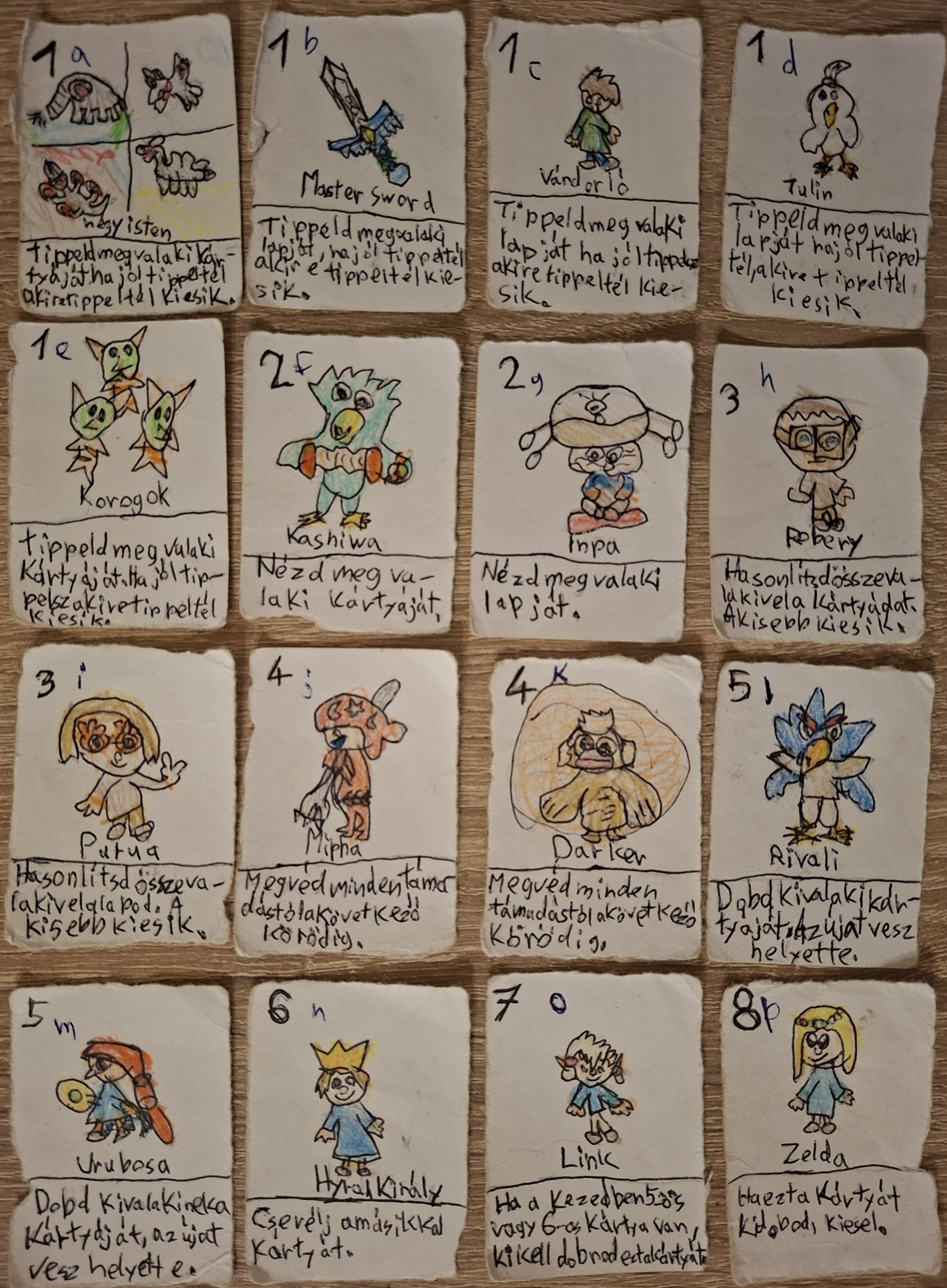
Printable cards for Seiji Kanai's Love Letter game in Hungarian and in English.
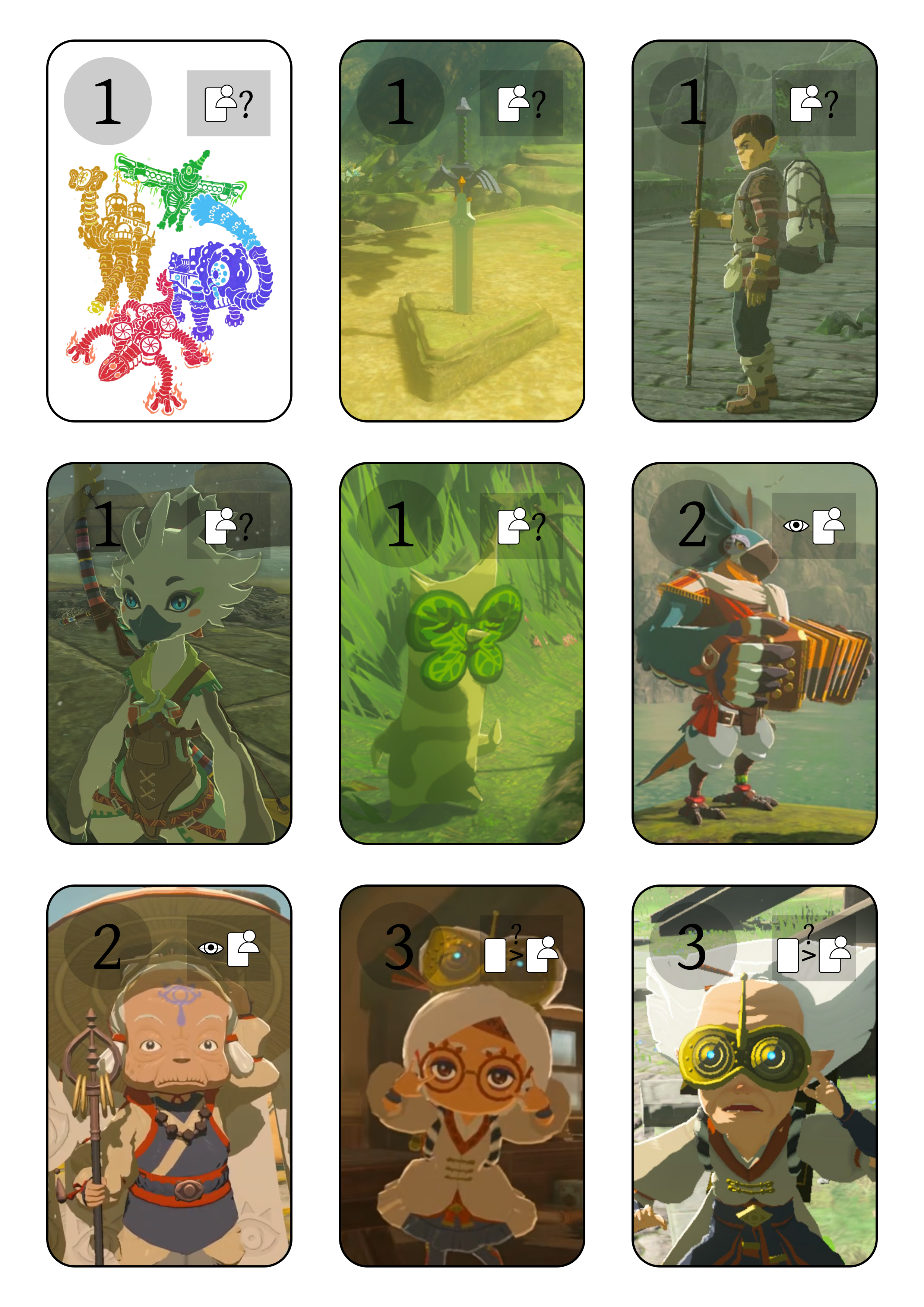
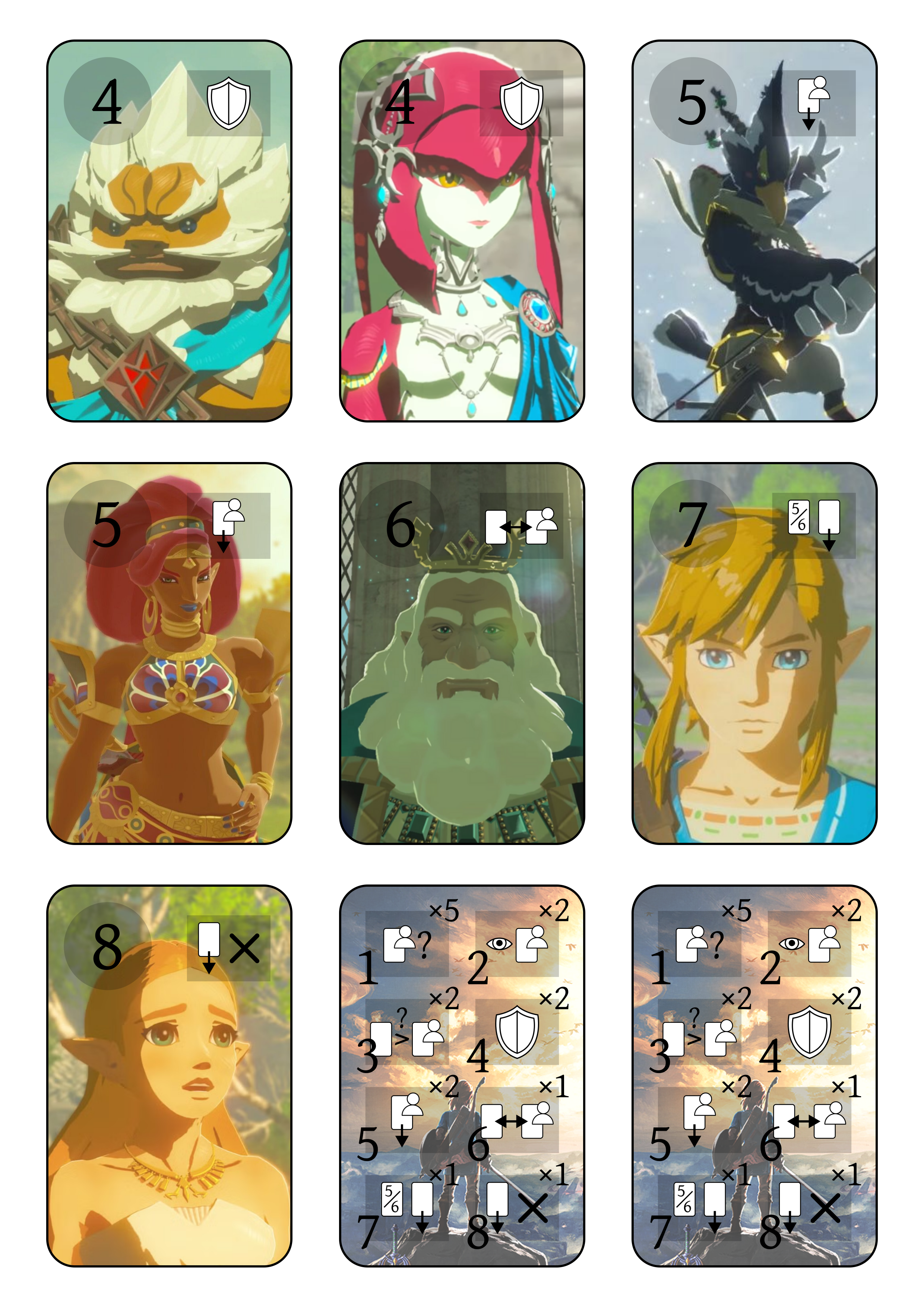
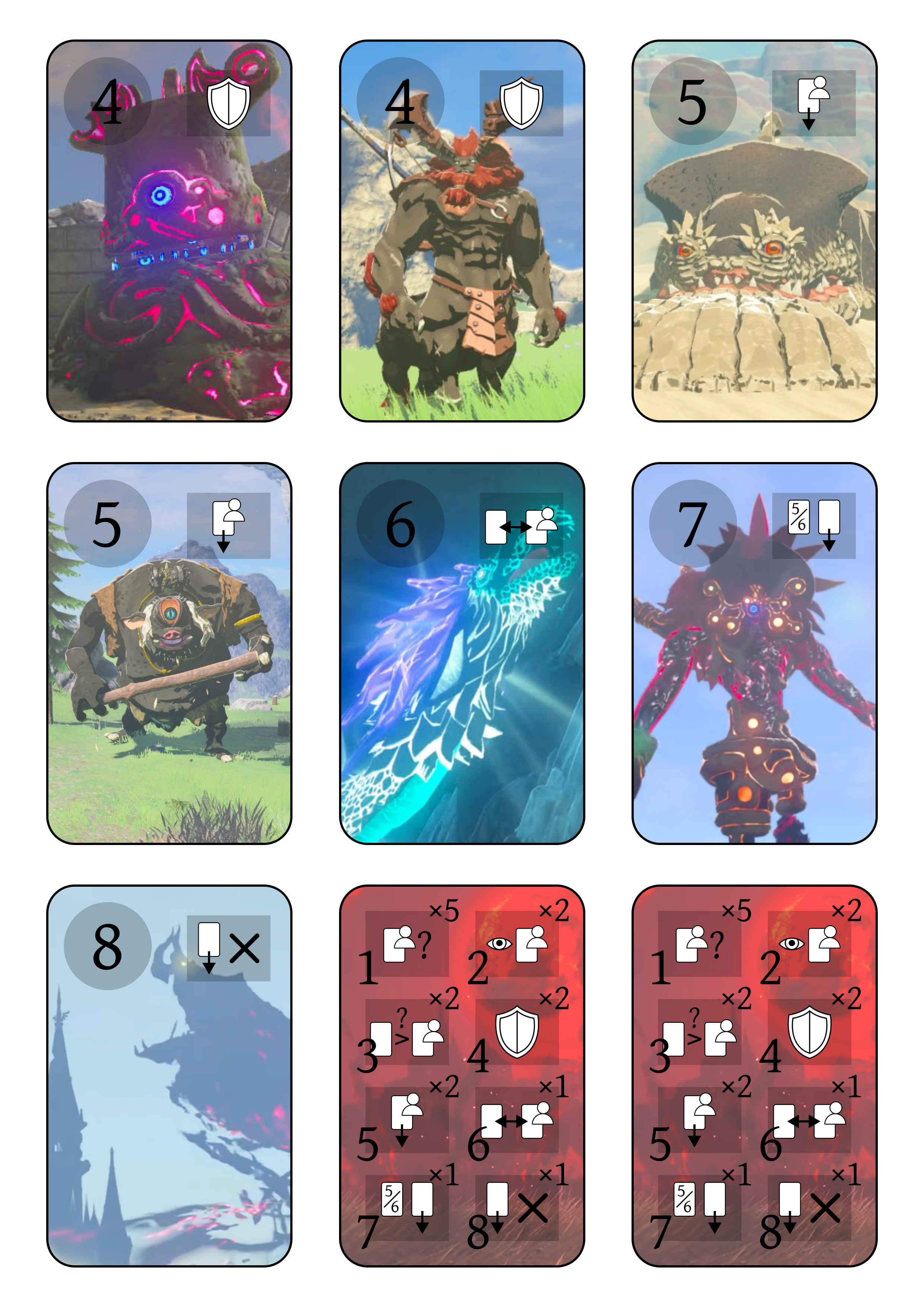
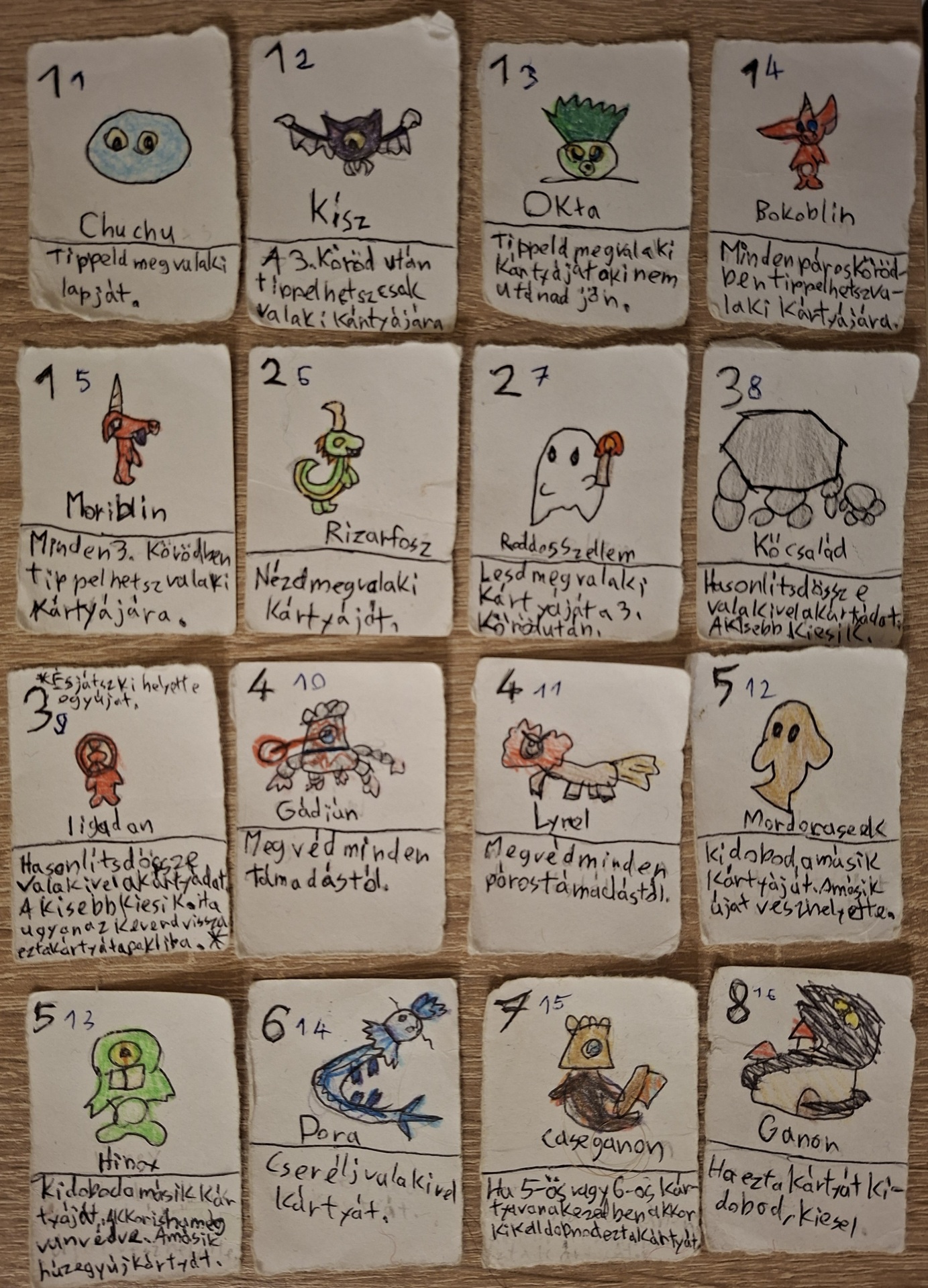
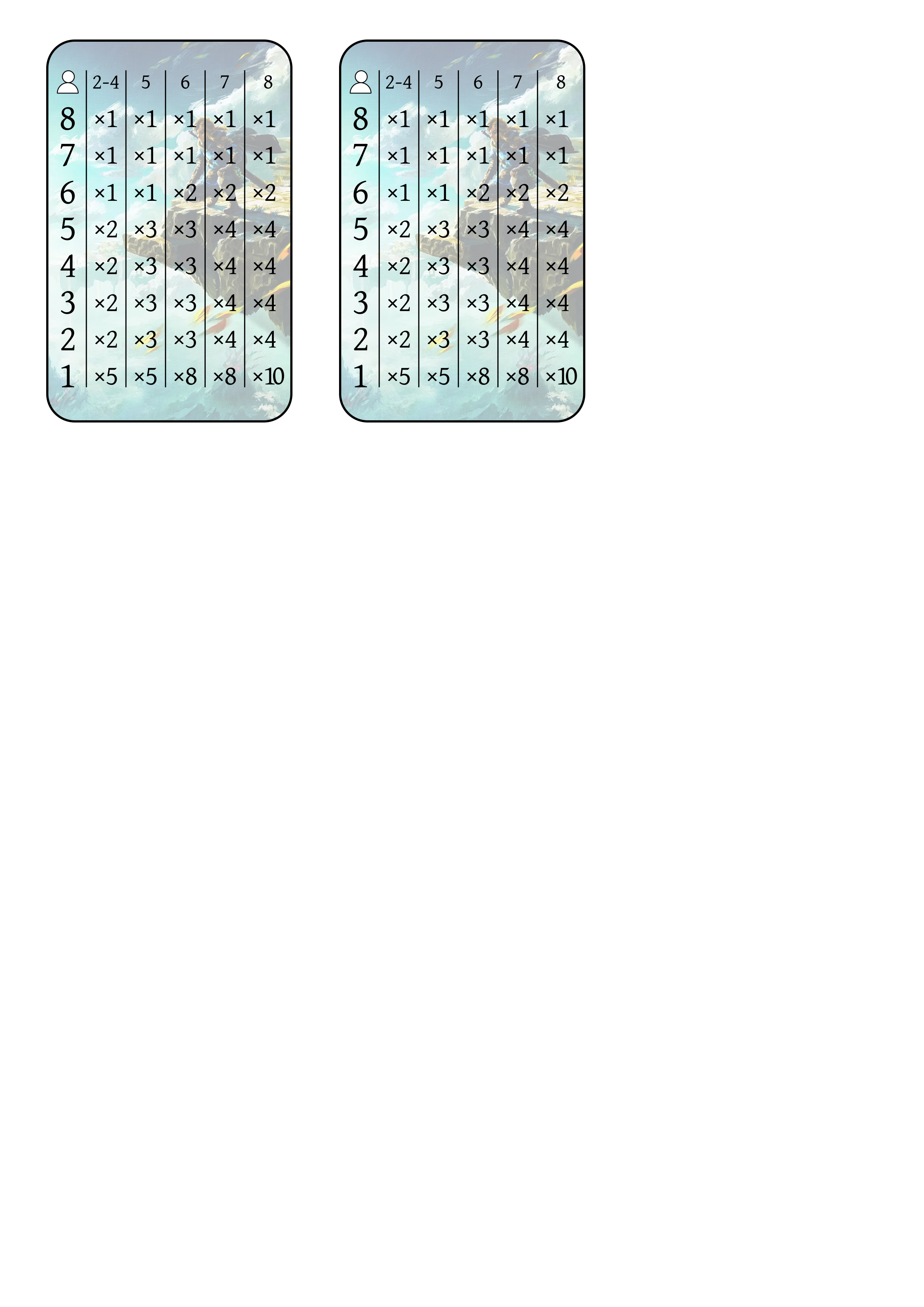
After 10 years, I created a Zelda (BOTW/TOTK) themed double deck, standard card size, printable on A4 paper (Good guys sheet1, sheet2, original; Bad guys sheet1, sheet2, original; and a player count reference sheet).
If you want to create your own set, here is my Inkscape template, where you only need to insert the images, and my GIMP template, where the cards can be inserted as layers at the guides, ready to print.
A short memo comparing different checkers rules: Russian checkers (shashki), English draughts, tournament (or pool) checkers and international checkers.
There is also a minimal printable shashki board for A4 paper using 1 inch squares (EPS source).
2017.12.20.: A board with numbers is also available (PDF, EPS).
I'm a believer of Emacs, but every now and then I have to use the EviL editor. This is a brief guide on the essentials of movement and editing in vi/vim.
Here is the original Org mode file, and the generated HTML.
As an exercise, I've tried to write up a 20-page introduction to Indonesian grammar (in Hungarian), covering (almost) all the basic constructions, along with a worked out example text. The goal was to create a document that can be read and understood with no previous knowledge of the language.
Download the PDF or get the latest LyX source with Git:
A comparison between the generalized Coons patch and our version of the Gregory patch was presented at the 10th Conference of the Hungarian Association for Image Processing and Pattern Recognition. This paper was accepted as a poster (PDF, Scribus) displayed on a fullHD display.
All the words I have learned from "Teach Yourself Beginner's Hindi" (R. Snell), "Teach Yourself Hindi" (R. Snell), and "Living Language Hindi" (M. Bhat) - the latter lists containing only the words not appearing in the previous ones. There are also some grammar notes. About using the dictionary file, see the snippet page.
A summary of some elementary Contract Bridge techniques (in Hungarian): trump play, notrump play, and defensive leads and signals.
All the words I have learned from the classic "Teach Yourself Spanish" by N. S. Wilson. There are also some grammar notes. About using the dictionary file, see the snippet page.
A new paper on creating G2 Gregory patches over a curve network. It was presented at the Pacific Graphic 2014 Conference in Seoul, and it is published in the Computer Graphics Forum journal. A (less polished) previous version was presented at the Seventh Hungarian Conference on Computer Graphics and Geometry, 2014.
A list of my favourite knots, mostly found in Geoffrey Budworth's wonderful "The Knot Book" (and of course in the Ashley Book of Knots).
After two years and three revisions, at last our paper is published in the Computer Aided Geometric Design journal.
Note: I have also presented this work at the GMP'15 conference in Lugano.
A summary of some advanced Contract Bridge techniques (elimination, throw-in, squeeze, trump/grand coup, Bath coup, Deschapelles coup) illustrated with examples (in Hungarian).
Get it in plain text or in PDF format.
A logical summary of how numbers are built up in Hindi.
All the words I have learned from "Teach Yourself Modern Persian" - both the wonderful 1971 version by John Mace, and the awful 2004 version by N. Farzad, the latter list containing only the words not appearing in the first. There are also some grammar notes. About using the dictionary file, see the snippet page.
Added the words from "An Introduction to Persian" by W. M. Thackston.
I've done an origami workshop at an Asia-related event, and also created some slides to introduce the main concepts (in Hungarian).
These are my Korean wordlists. I have tried to learn Korean from quite a few books. The first was Teach Yourself Korean (M. Vincent & J. Yeon), then came the Elementary & Continuing Korean (R. King & J. Yeon), then I found the nice website of Sogang University, which included a few courses. I've also taken some grammar notes.
It was only much later when I realized that Korean is very easy to learn through Japanese. So I bought 文法をしっかり学ぶ韓国語 and 前田式韓国語中級文法トレーニング, and started it all over again (wordlist, grammar notes). About using the dictionary file, see the snippet page.
Our paper "Transfinite surface interpolation over specific curvenet configurations" at the 14th IMA Conference on Mathematics of Surfaces.
A Greek (which is a port of the modified Emacs greek-babel input method), a Latin (that contains diacritical marks), a Russian (which is a port of the Emacs transliterated cyrillic input method), a Turkish (which is a prefix translation of the Emacs turkish-postfix input method - another Emacs input method mimics the (non-modified) characters of the Turkish Q layout), a Persian (which is a translation of the Emacs farsi-isiri-9147 input method), an Arabic, implementing the standard layout (image from Wikipaedia), and two Hungarian tables for the Smart Common Input Method (SCIM). Place these files in ~/.scim/user-tables, and don't forget to edit the icon path in the txt files. There is also an Emacs port of the SCIM JyutPing (Cantonese Big5) input method, and a postfix Yoruba input method for Emacs (not yet translated to SCIM).
My lecture on the game of go and the Japanese language, presented at the Japan Foundation office in Budapest. I have also created a 9x9 PostScript board for the students (also in PDF and with wood background), and one twice as large for the whiteboard using 40mm magnets (also in PDF).
Added: a 5x5 PostScript board for goro problem solving (also in PDF).
Added: a template for recording go games (碁罫紙) (19x19, A4 size).
Two recent papers: a longer one presented at the Hungarian KÉPAF 2013 conference, and a short paper for Eurographics 2013.
Our invitation card created in Scribus. There is also another version for our wedding party in Japan with an RSVP card.
My PhD dissertation on "Fair Curves and Surfaces", along with its synopsis (in English and in Hungarian), and the theses booklet (in English and in Hungarian). The main results are also illustrated in the (Hungarian) slides that I presented at the defense of my dissertation.
A paper that will be published in the Graphical Models journal.
Two papers we've written for the Sixth Hungarian Conference on Computer Graphics and Geometry, 2012: 3D Shape Design Using Curve Networks with Ribbons, and New Schemes for Multi-sided Transfinite Surface Interpolation.
I have also given a talk on the latter topic at the International Workshop on New Trends in Applied Geometry held in Gazzada, Italy.
This is my public key for anyone who wants to send me secure data. You can import it to your keyring using GnuPG with gpg --import peter-salvi.pgp.
PGP Fingerprint: F069 3534 5174 7418 F532 5FD2 CF7A 4AA7 B89A BC28
GTalk/OTR Fingerprint: 01904A6A 78CB8BCB DDBEA30B E0274B8F FBBA3D95
ICQ/OTR Fingerprint: 4502CD10 404F82BC 89E4E9F3 10BDDB91 5B3B4264
MSN/OTR Fingerprint: EC68BEF1 DDB9319E B87D0B35 DF17EEA2 200DA5FE
A paper we've written for the SPM2011 conference. It will be published in the CAD journal.
As an exercise, I've tried to write up a 20-page introduction to Swahili grammar (in Hungarian), covering (almost) all the basic constructions, along with a worked out example text. The goal was to create a document that can be read and understood with no previous knowledge of the language.
Download the PDF (there is also a cheat sheet), or get the latest LyX source with Git:
A description on configuring my cheap Kraun gamepad to work under Linux. It involves downloading various tools, hacking a kernel module and patching the SDL library - all in a day's work for a programmer!
All the words I have learned from "Colloquial Swahili" (D. McGrath & L. Marten) and those I have learned from "Teach Yourself Swahili" (J. Russell) and those from "Living Language Swahili" (Kh. Mohamed & A. Mazrui), containing only the words not appearing in the previous lists. There are also some grammar notes. About using the dictionary file, see the snippet page.
2010.02.24.: The word list of "Colloquial Swahili" is complete.
2010.04.24.: The word list of "Teach Yourself Swahili" is complete.
2011.05.05.: The word list of "Living Language Swahili" is complete.
All the words I have learned from "Colloquial Cantonese" (Keith S.T. Tong & Gregory James), along with Hungarian meanings and chinese characters (also in HTML version). There is another list in text or in HTML for "Teach Yourself Cantonese" (H. Baker & P. Ho), containing only the words not appearing in the first list. About using the dictionary files, see the snippet page.
2009.11.22.: The word list of "Colloquial Cantonese" is complete.
2011.03.24.: The word list of "Teach Yourself Cantonese" is complete.
All the words I have learned from "Teach Yourself Indonesian" (Ch. Bymes & E. Nyimas) and some grammar notes. About using the dictionary file, see the snippet page.
2011.02.07.: The word list of "Teach Yourself Indonesian" is complete.
All the words I have learned and some grammar notes (HTML) I took (in Hungarian) while learning from "Teach Yourself Arabic" (J. R. Smart) and other sources, such as "Arabic - An Essential Grammar" (Faruk Abu-Chacra) and "A New Arabic Grammar of the Written Language" (J. A. Haywood & H. M. Nahmad). The words file also has a pattern search feature (written in Emacs Lisp).
Another ASCII-based dictionary contains all the words from the book "Teach Yourself Gulf Arabic" (J. Smart & F. Altorfer).
There is also yet another dictionary based on the words from the series العربية بين يديك (Arabic Between Your Hands). About using the dictionary file, see the snippet page.
Counting may be the most complex part of the Arabic language. Here is a short (Hungarian) memo with a few examples (also in HTML).
A few thoughts on what are the prerequisites for a comfortable programming language. Of course all of this is very subjective.
A paper I've written for the Fifth Hungarian Conference on Computer Graphics and Geometry, 2010 and the slides I've presented. It was also rewritten as a short paper for the SPM2010 conference (there is also a longer version).
A memo on how to setup CLISP for writing scripts, along with a short example.
A list that contains every (1-character) wubi code and maps them to their corresponding chinese character and pronounciation (in pinyin). There is a version with Unicode accents, and a two-column PDF.
This dictionary is automatically generated from the data files of my Wubi Practice program and the tonepy input method in Emacs.
A memo on how to compile Clojure programs into JAR files.
Two posters about my research, created with Scribus. Available in Scribus (first, second), EPS (first, second) and JPG (first, second) file formats.
All the words I have learned and some grammar notes (HTML) I took (in Hungarian) while learning from "Introduction to Attic Greek" (D. J. Mastronarde). This table contains sample words for practicing every declension and conjugation I (should) know (there is a filled version here, and also in PDF format). There is also a list of my solutions to the exercises of the book "Homeric Greek - A Book for Beginners" (C. Pharr). About using the dictionary file, see the snippet page.
Note: The Homeric Greek exercises are temporarily suspended.
A short memo (in Hungarian) on the rules of Chinese and Japanese mahjong, containing the most important words in both languages (also with romaji for Japanese).
Download it in TXT or in HTML.
The slides of the presentation I've given on the ICFP'08 programming contest with my friend 黄涧石 at a Lisp seminar in Tokyo.
Download in English (PPT, PDF) or in Japanese (PPT, PDF).
I've created a few (four-gray) thumbnails for some books I've uploaded to my Cybook, using this snippet.
A more-or-less complete list of anime titles I've seen, with a four-scale (very subjective) rating system.
Well, it's SVG, which is a markup language, so it's text in a way :). There is an Emacs logo (100dpi PNG), the famous FailWhale (100dpi PNG) and a character from the anime series Honey and Clover called Yamada (100dpi PNG).
All the words (html) I have learned and some grammar notes (html) (in Hungarian). There is also a list of my solutions (html) to the exercises of the book "Latin for Beginners" (B. L. D'Ooge). About using the dictionary file, see the snippet page.
2008.07.04.: The answer list is now complete.
These were my "slides" for two C++ classes I gave. The first is about templates (exercises, solutions), and the second is about STL (exercises, solutions).
These memos are to help me remember how can I do different things with OpenGL: rotation, zoom and pan in a perspective view; NURBS surface textures; maybe more to come later.
There is also a utility to generate isophote textures.
List of the (mostly open-source) programs I frequently use.
A paper I've written for the GMP 2008 conference held in Hangzhou, China. Also presented in a shorter form at the annual meeting of the Japan Society for Precision Engineering.
An attempt to create an enjoyable 'test yourself' quiz for Emacs users. There are only a few (basic) tasks for the moment.
There is also an answer list for my personal use.
All the words I have learned and some grammar notes (in Hungarian). About using the dictionary file, see the snippet page.
A short note to remind myself when to use which programming language / library.
All the words I have learned and some grammar notes (in Hungarian). About using the dictionary file, see the snippet page.
I sometimes jot down the melodies in my head - movie themes and songs, mainly. These scores were created with Lilypond; I've uploaded the source files I still have, too.
| Composer | Title | Image | Source | Sound |
| Liu Song-bai | Chun Xiao | png | ly | |
| Naozumi Yamamoto | Fighting Elegy Theme | png | ly | midi |
| Qi Yu | Ganlanshu | png | ly | |
| John Williams | Harry Potter Theme | png | ly | |
| ? | JR Signal at Takada no Baba | png | ly | |
| Loituma | The famous Leekspin Song | png | ly | midi |
| Li Chun-bo | Loulan Xinniang | png | ly | |
| ? | Misaki no toudai | png | ly | midi |
| ? | Fragment of a repeating Naruto theme | png | ly | midi |
| Tchaikovsky | A few measures from (maybe) the overture of Romeo and Juliet |
png | ly | |
| ? | Rudolph the Red-Nosed Reindeer | png | ly | |
| Li Chun-bo | Xiao Fang | png | ly | |
| Li Chun-bo | Yi feng jiashu | png | ly | |
| Deng Li-jun | Yueliang daibiao wo de xin | png | ly |
Some slides (in Hungarian) about CLOS and the conditions system in Common Lisp, written for a class at university. Largely based on Peter Seibel's talk at Google TechTalks, also his wonderful book "Practical Common Lisp" and some other sources.
Available in OpenOffice and PDF file formats. There is also an archive of the examples I have shown during the presentation.
A paper I've written for the Third Hungarian Conference on Computer Graphics and Geometry, 2005.
My master's thesis at the Eötvös Loránd University (also in PDF).
Timed Hungarian translation of the Rurouni Kenshin OVA in SubStation Alpha format.
Classical Japanese conjugation tables in Hungarian.
Walkthroughs for Dunnet and Hunter, in Darkness.
See more information at Baf's Guide.